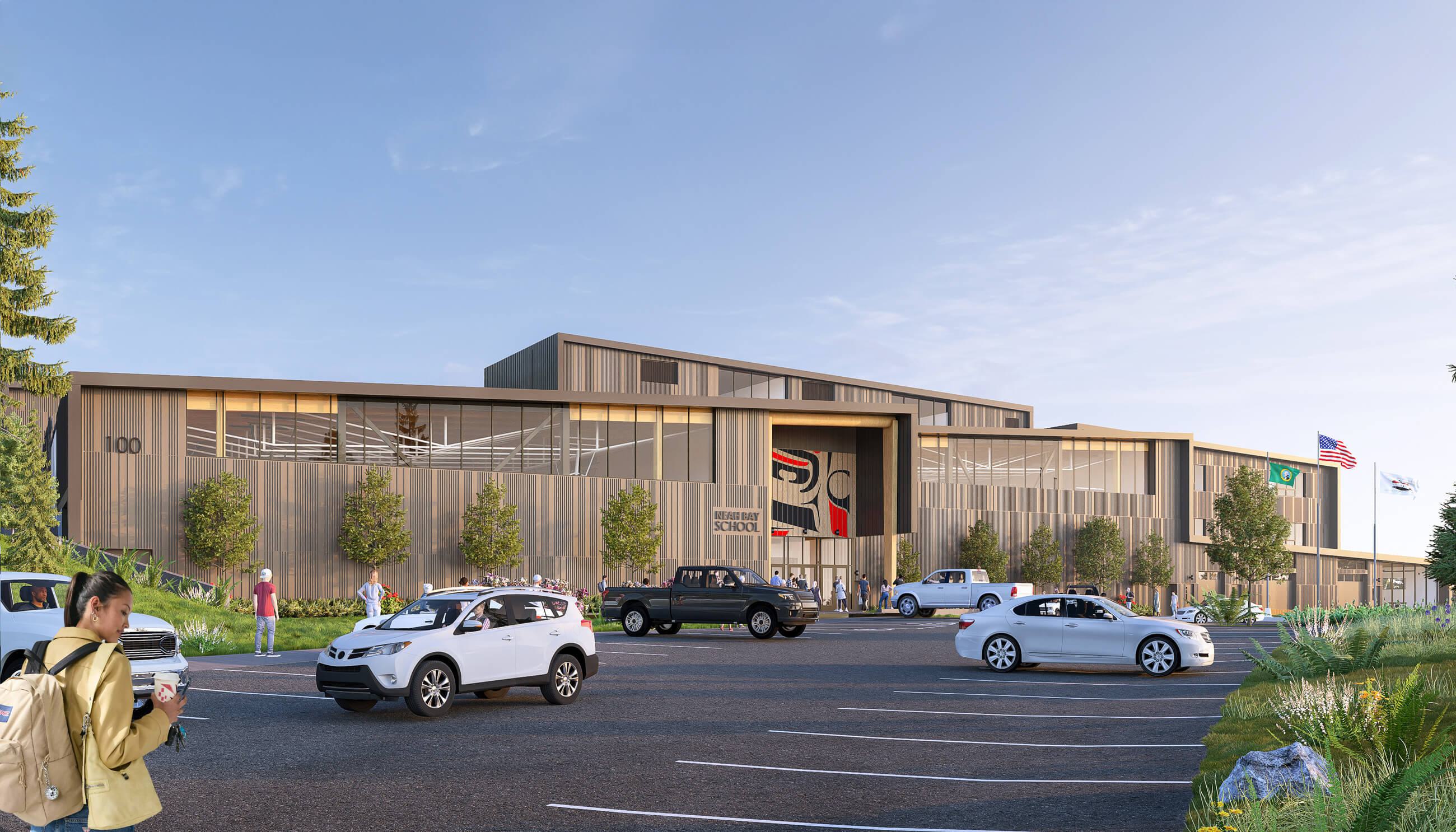
Maritime|253 Skills Center Tacoma, WA

Maritime Placemaking

The Maritime|253 Skills Center grew from a proactive and visionary partnership between the Port of Tacoma and Tacoma Public Schools. The two-building, waterfront campus serves as both headquarters for the West Coast’s third-busiest international port and hands-on skills center that prepares high school students for careers in maritime and technical industries.

Client

Tacoma Public Schools & Port of Tacoma

Project Details

  • 95,000 SF across 2 buildings
  • Progressive Design-Build (PDB) Delivery
  • Anticipated Completion 2026

A Multi-Use Vision

The campus is designed both for the administrative needs of the Port – an essential driver of regional economic development and international commerce – and to equip students from area school districts with essential, technical training. The Maritime|253 Skills Center reflects Tacoma’s ambition as an international city, elevates the Port’s civic visibility, and signals a forward-looking commitment to educational access and regional economic vitality. 

The Design Challenge

Rare Opportunity with Complex Restraints

Located across the waterway from downtown, the site—once a designated Superfund area—required extensive soil remediation and waterfront restoration. Equally important was honoring its layered history, including its place as the former site of a Puyallup Tribe warrior village at the “bend at the bottom of the river,” from which the Tribe takes its name.

Thinking Beyond Boundaries

Because the campus was designed to combine educational, industrial, and government functions, it challenged conventional design models and local land use codes. The project demanded deep collaboration—bringing together sponsoring agencies, the Army Corps of Engineers, Burlington Northern Railroad, the Puyallup Tribe, and the City of Tacoma. The resulting design also had to anticipate future needs: ensuring resilience against sea level rise, supporting multiple modes of water access, and setting a strong foundation for future waterfront development.

Design Approach

A Solution Emerges

The resulting architecture balances ambition and restraint, in a solution that elevates Tacoma while remaining grounded in its character. The bow of the Business Center creates a strong, recognizable silhouette, standing as a new landmark along the waterway. Modest in height yet expressive in form, the building leans forward, reaching out and upward as a gesture of welcome from the Port to the city and the world.

Port Business Center

The Port Business Center serves as a signature destination, redefining Tacoma’s front door to the world. Inside, the ascending layout guides visitors from the waterfront esplanade to a rooftop vista: an architectural expression of growth and forward momentum, symbolism meaningful to regular staff and visiting trade delegations alike. In appreciation of Tacoma’s dramatic natural vistas, an observation deck places the working port and its international activity on full display.

Maritime|253 Skills Center

In the adjacent Maritime|253 Skills Center, space is crafted as a flexible, real-world workshop, equipping high schoolers with training in robotics, marine technology, fabrication, welding, and vessel simulation. These dynamic spaces support meaningful, family-wage job creation — serving 600+ students across each academic year, an essential catalyst for workforce development.  

Revitalized Public Space

Pragmatic resource stewardship guided choices, addressing not just financial and operational efficiency, but also civic pride and environmental restoration. The project transforms industrial land into marine habitat and a walkable public domain. A public plaza, event space, beach access, and a new public dock offer vibrant, multimodal connectivity – demonstrating how institutional investment can enable citywide regeneration. 

Why TCF

The TCF and BNBuilders team embraced the project for its ambition, complexity, and civic importance. Guided by a spirit of open collaboration, the process honored every stakeholder and placed the public good at the center of each decision. Paying homage to context, culture, and resilience, the design is restorative of Tacoma’s urban fabric—respecting history while establishing a new public landmark at the confluence of city, port, and waterway.