

Bryant Montessori School
Architecture, landscape, and educational approach are woven together to promote engagement, sustainable practices, and a nurturing environment at Bryant Montessori.
Read More
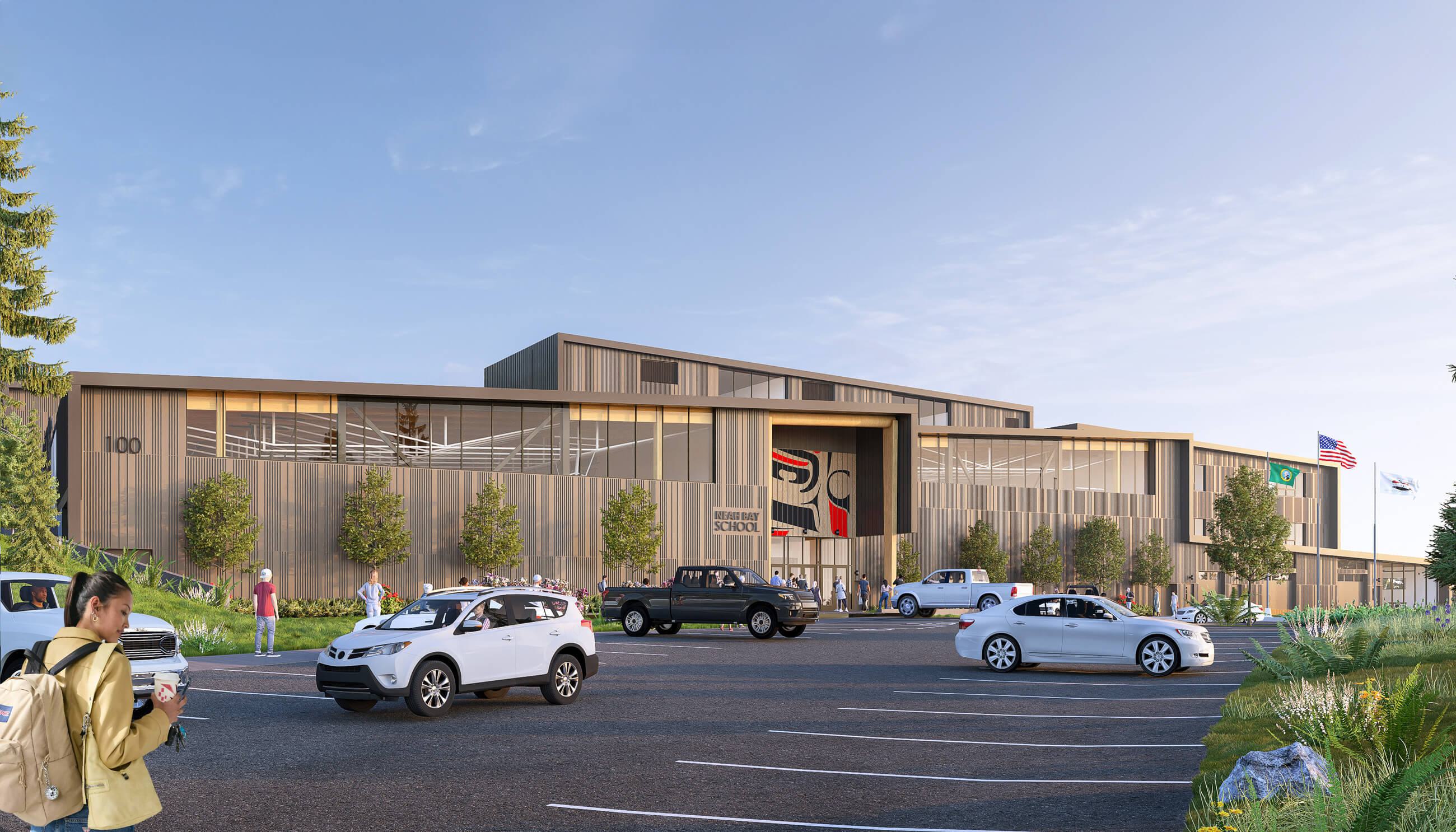

At the northwesternmost edge of the contiguous US, the Makah people have long lived in deep relationship with sea and shore — shaping their culture, sustenance, and identity around the meeting of land and ocean. Their home at Cape Flattery, “the beginning of the world,” stands as both a sacred origin and a continual act of resilience. Generations of Makah have carried forward knowledge that links survival with stewardship, honoring a legacy of balance, adaptability, and care for community. Today, that spirit endures through education, self-determination, and collective purpose — advancing a future that safeguards their people, culture, and place with the same empathy, pragmatism, and resolve that have guided them for millennia.
Cape Flattery School District


The Cape Flattery School District and the broader community recognize the life-safety benefits of relocating the school to higher ground, while also feeling the weight of separation from its historic setting at the water’s edge. The design team approached this with care and empathy, preserving visual and symbolic ties to the ocean and honoring the Makah’s deep seafaring traditions.


Having received funding through the OSPI School Seismic Safety Grant, the site search conducted by the Cape Flattery School District sought land that would balance safety and access with cultural continuity. The chosen location—elevated, abundant in resources, wooded yet connected to community infrastructure, and outside valuable commercial forestry—offered security but posed physical challenges of steep terrain and wetlands. Within a modest budget, the design team responded with inventive, place-based solutions that reflect the Makah’s enduring commitment to respectful land stewardship.
Neah Bay’s remote location shapes both its challenges and opportunities. Graduating students and young adults have few opportunities to pursue meaningful careers that allow them to remain and contribute within the tribal community. The school curriculum weaves together Makah heritage with pathways into local industries such as forestry, fishing, and public service, ensuring students can build futures in place. The architecture reflects this commitment, celebrating cultural identity and reinforcing a shared sense of place that looks to the future while remaining grounded in tradition.


The new school’s compact form and homogenous envelope draw inspiration from the traditional longhouse, reflecting the efficiency and resilience of Makah construction. Thoughtful space planning and a restrained material palette honor a culture shaped by subsistence and stewardship, where creativity and resourcefulness define prosperity. The new campus carries these values forward—reflecting adaptability, reuse, and respect for the land as guiding principles of design.


Organized across three floors, the new school creates a distinct sense of place for every age group. Young learners occupy the upper level with direct outdoor access to the surrounding landscape, while middle and high school students engage in hands-on learning within a working village below. At the base, community and cultural spaces open to the public, reflecting the Makah’s enduring tradition of welcome. All levels gather around a central multi-purpose space—the cultural heart of the campus—connected by a tall, light-filled atrium that celebrates shared learning and visibility across generations. The mass timber structure appropriately connects traditional indigenous building materials with modern efficient construction technology.
Shaped by both function and climate, the building nestles into the hillside, with shared spaces such as the gymnasium and commons anchoring the east side and classrooms stacking to the west. A folded roof and protective north–south slopes shield the structure from the region’s heavy rainfall, while profiled metal siding reflects shifting light like that of a forest clearing. Terraced landscaping follows the natural topography, creating accessible paths that connect to an outdoor amphitheater and the working village—an essential part of Makah education featuring a fish hatchery, greenhouse, and traditional fish pits and smokers. True to the Makah name, meaning “those generous with food,” this sheltered village also welcomes community gatherings centered around shared local harvests and celebration.
Work


